
 Korean
- CompanyCompany
- TechnologyTechnology
- Motorized StageMotorized Stage
- Manual StageManual Stage
- Customer ServiceCustomer Service
- Arch-ServoArch-Servo
- SpecificationSpecification
- MaterialMaterial
- BearingBearing
- Drive SystemDrive System
- Motion ControlMotion Control

 home > Technology > Drive System
Drive System
This is the core system responsible for driving precision positioning stages (Linear and Rotary). Representative types include Lead Screws, Ball Screws, Belt Drives, and Worm Gears. It is integrated with components like Couplings, which connect to the drive system to control dynamic characteristics such as backlash, speed, and torque transmission.
Lead Screw
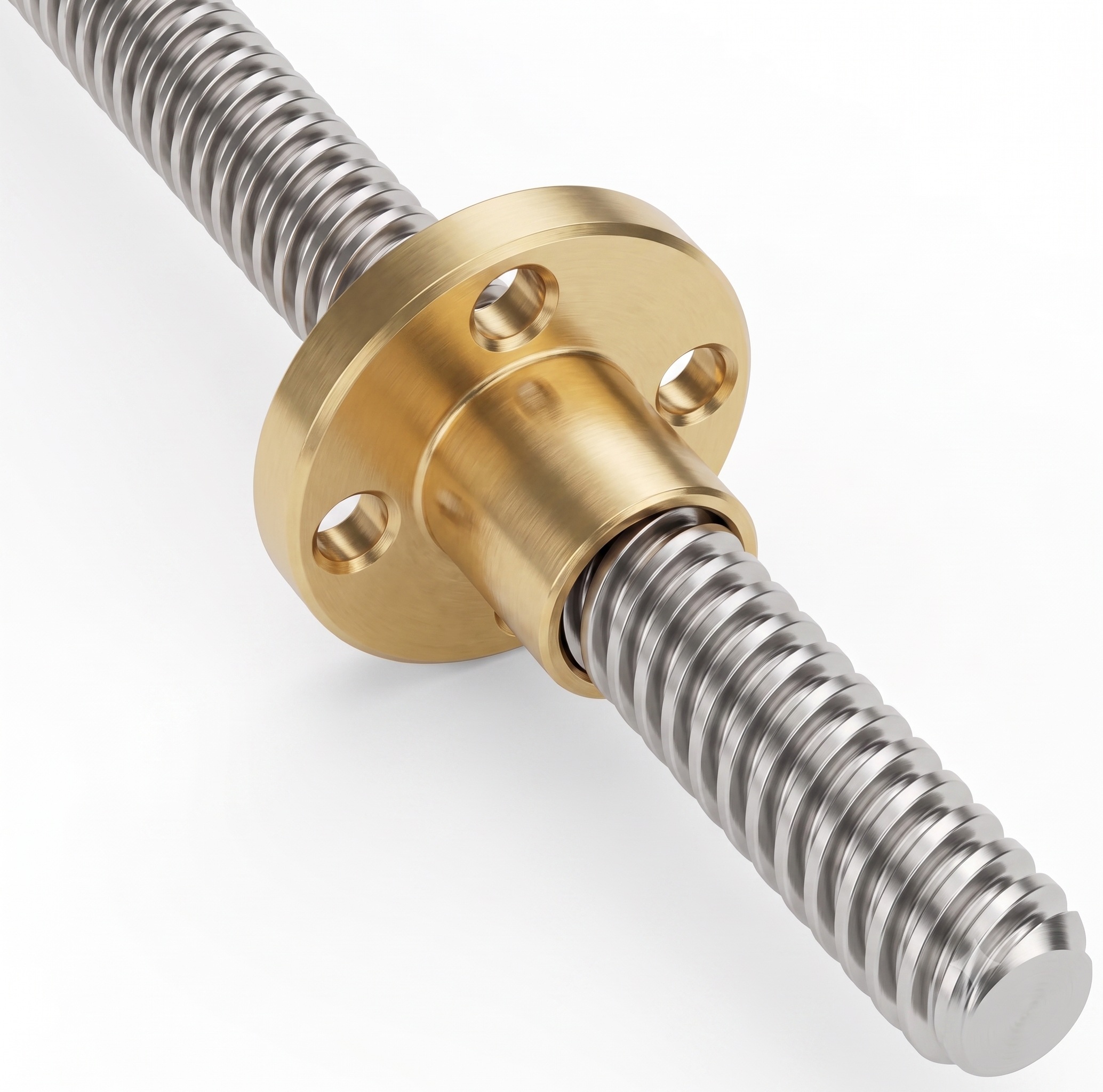
This is the most widely used drive element for axial feed. It consists of a precision-ground screw and a nut made of synthetic resin or brass. Compared to other linear drive systems, it offers less vibration and noise, providing smooth motion. Synthetic resin nuts are primarily applied to horizontal loads, while brass nuts are used for vertical load applications.
Worm Gear
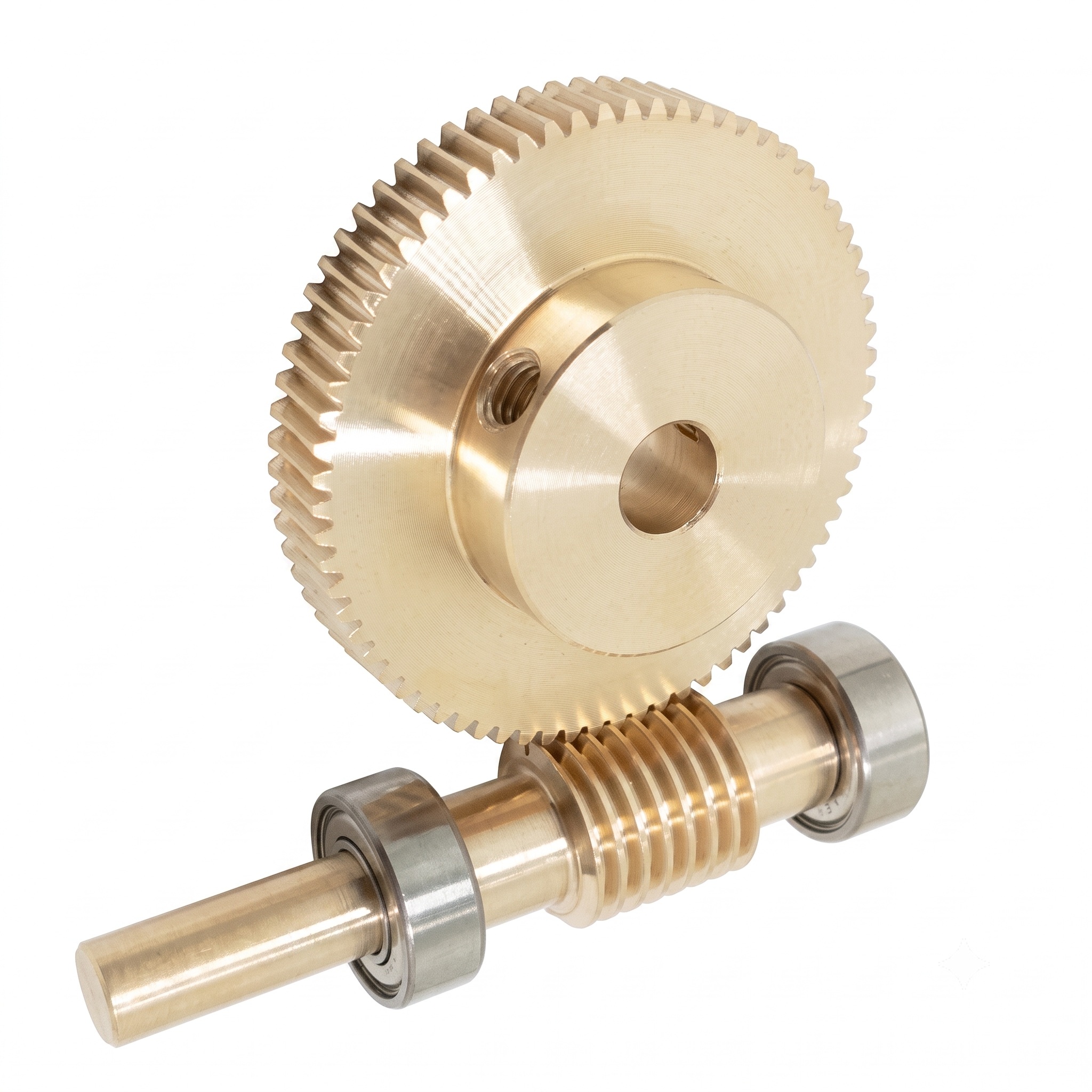
A mechanical element that converts the axial direction of rotational motion through the meshing of a worm and a worm wheel. Compared to standard direct screw coupling methods, it enables precise speed control through the gear ratio, provides high load capacity, and features a self-locking capability.
Coupling
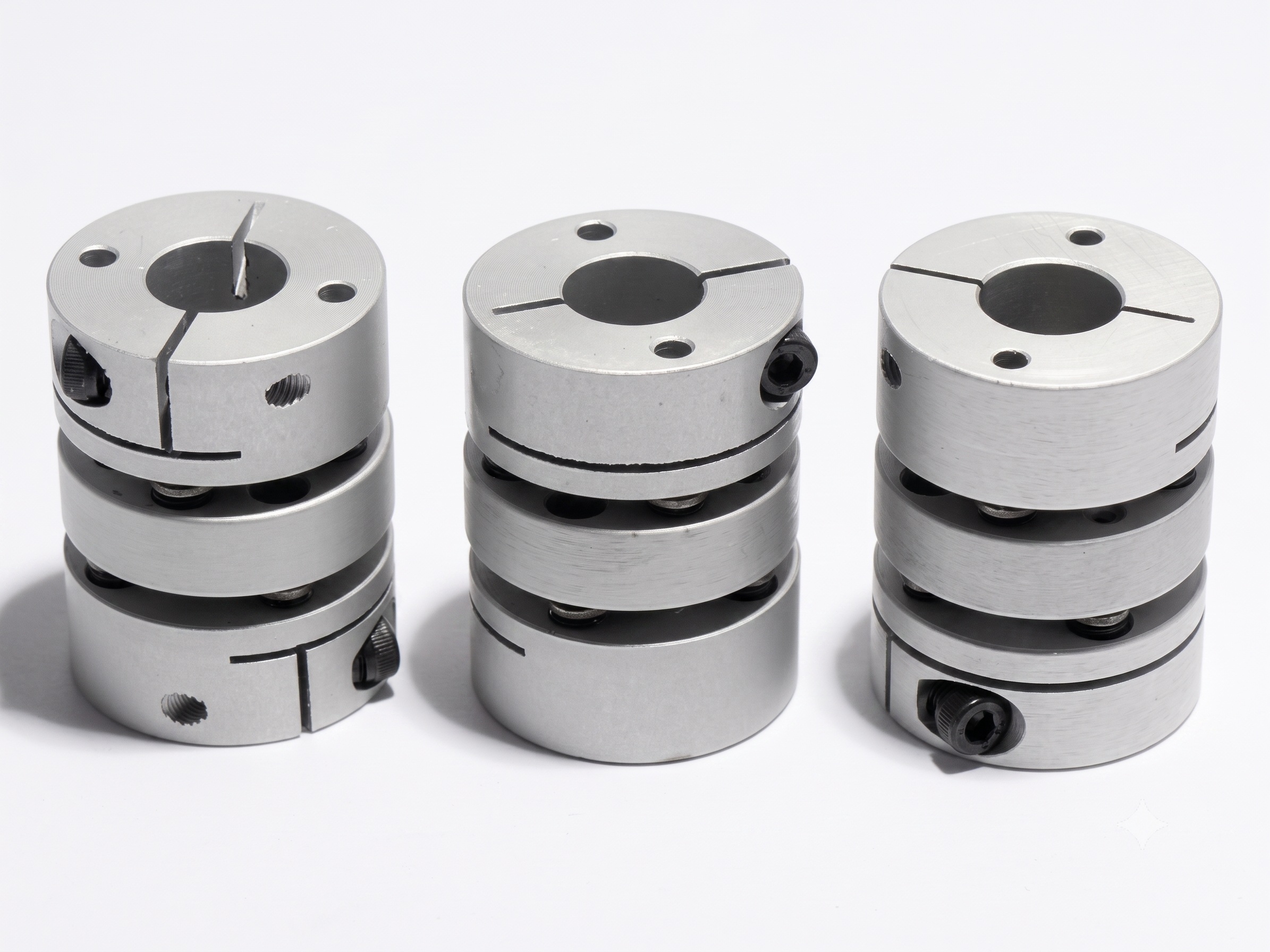
An essential power transmission device that transfers torque generated by the motor to a drive system such as a screw. In particular, a flexible coupling mechanically compensates for minute misalignments between the motor and screw shafts that may occur during operation, thereby protecting the system's lifespan and precision.
Ball Screw
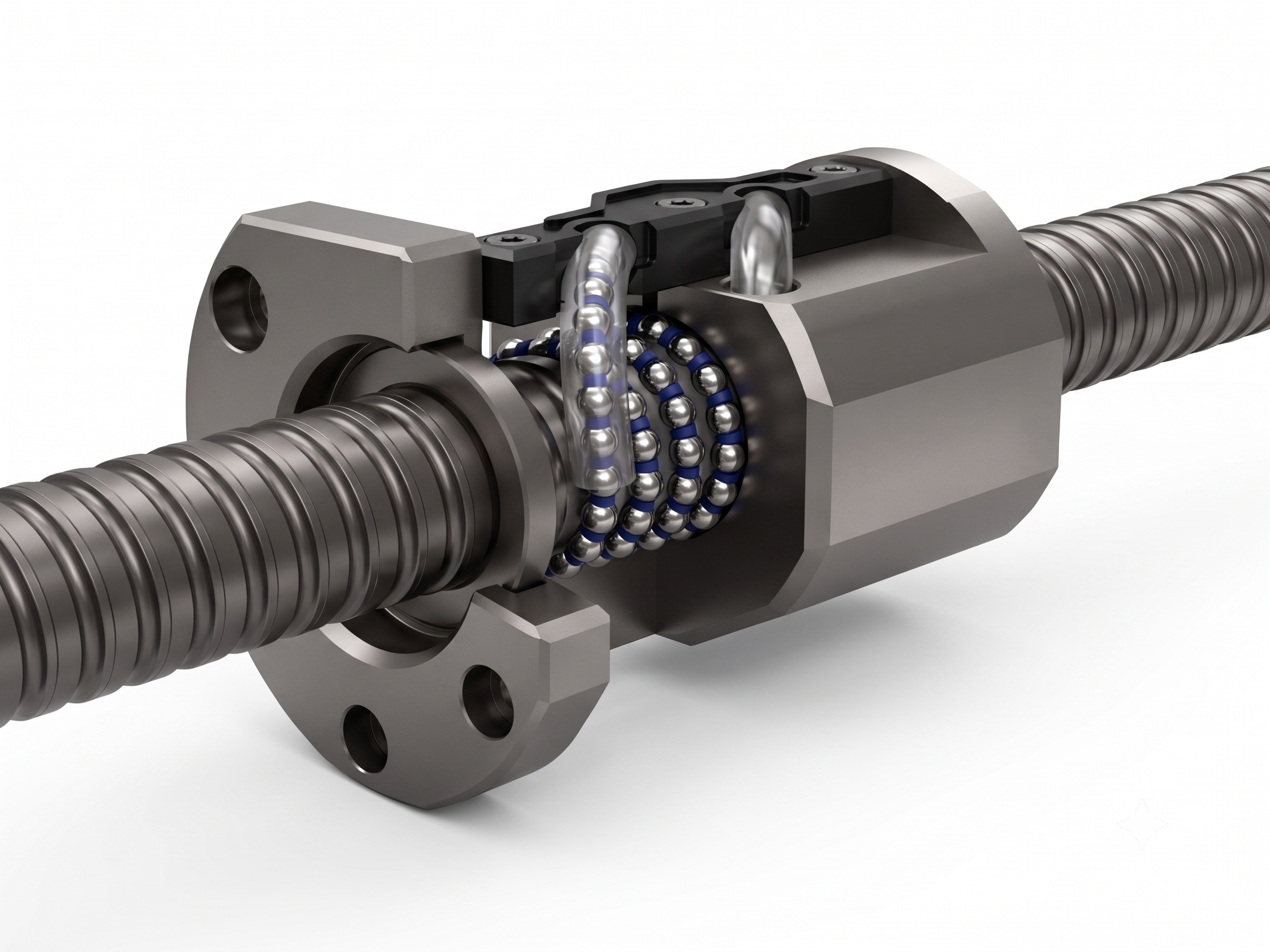
A high-efficiency power transmission device that converts conventional sliding friction into rolling friction by inserting precision steel balls between the threads of the screw and nut. With low frictional resistance, it experiences minimal wear, ensuring a long lifespan and excellent precision. Depending on the manufacturing method, they are classified into rolled and ground screws.
Belt Drives
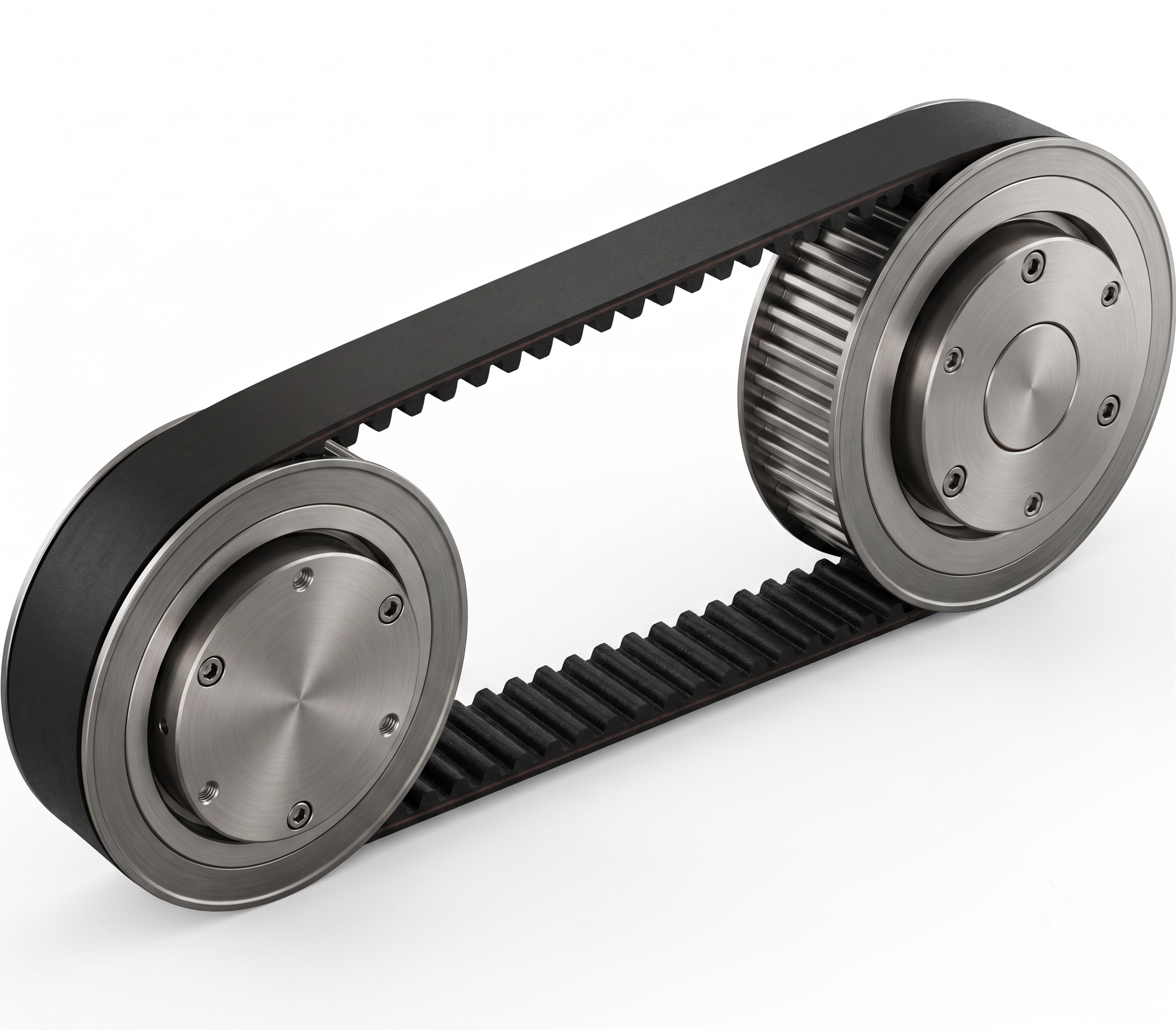
Composed of two pulleys and a timing belt. It converts the motor's rotation into linear motion through the tension of the belt. Although its absolute repeatability is relatively lower compared to lead or ball screws, it generates low noise and is highly advantageous for high-speed shuttle motions and long-distance transfers.
Drive System Comparison
| Consideration | Lead Screw | Ball Screw | Belt Drive | Linear Motor |
|---|---|---|---|---|
| Noise | ◎ | ○ | ○ | ◎ |
| Back Driving | Self Locking | Yes | Yes | Yes / Free |
| Backlash | △ | ○ | △ | ◎ |
| Repeatability | △ | ○ | △ | ◎ |
| Mechanical Efficiency | △ | ◎ | ○ | ◎ |
| Life and Mechanical Wear | △ | ○ | ○ | ◎ |
| Shock Load | ○ | △ | △ | ◎ |
| Smoothness | ○ | ○ | ○ | ◎ |
| Speeds | △ | ○ | ◎ | ◎ |
| Cost | ◎ | ○ | ○ | X |

